The Awakening of Lotabeg House
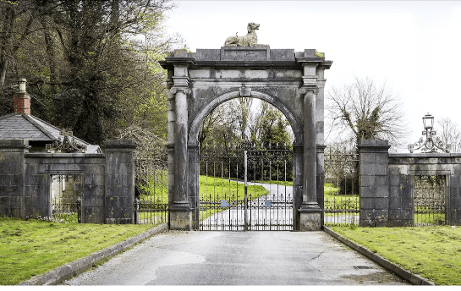
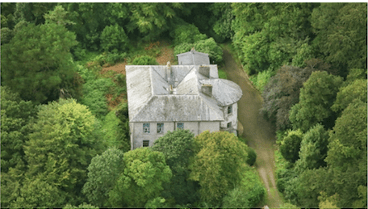
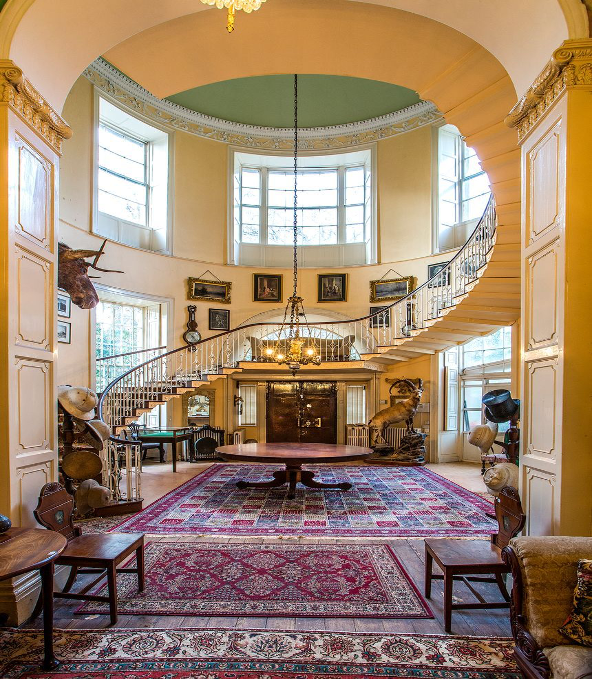
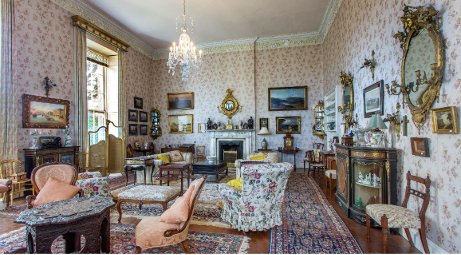
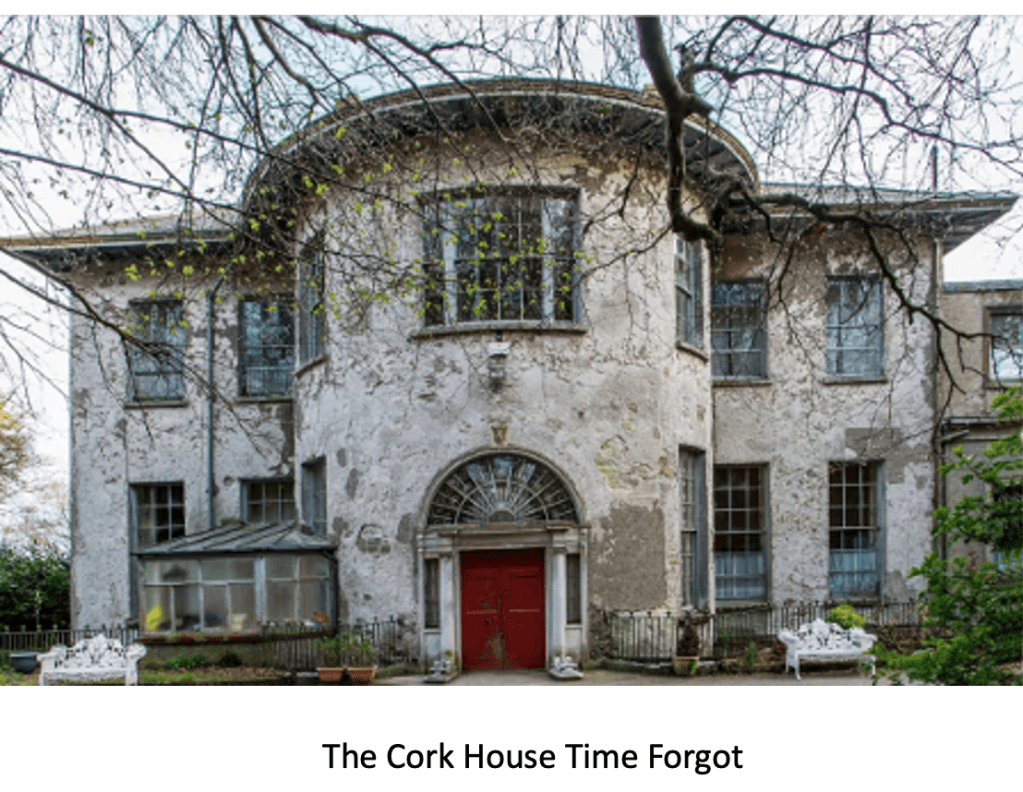
In 2016 Lotabeg House in Cork was opened for auction revealing the interior intact with seventeenth to nineteenth century furnishings undisturbed since 1893.
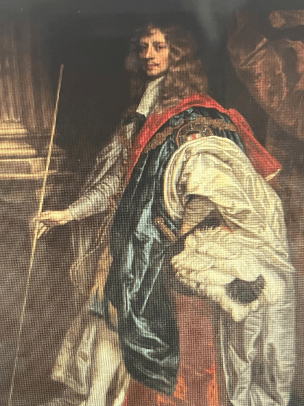
No-one at the time gave a plausible explanation for the origins of these furnishings or the history of the painting of the Duke of Ormond, by Sir Peter Lely, sold at the Lotabeg auction for £120,000.
This article attempts to rectify the misunderstandings regarding the ownership and history of Lotabeg House.
Lotabeg House 1675-2016
Lotabeg House was the country residence of the Galwey family of Lota, a family of barristers whose principal residence was in Dublin.
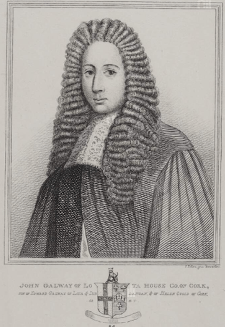
The early history of Lotabeg is documented in established genealogical and heraldic sources, including:
- The Pedigree of the Galweys of Lota, College of Arms (1762/3)
- Burke’s Landed Gentry of Ireland (various editions)
- Sir Henry Blackall, “Genealogy of the Galweys of Lota,” Journal of the Cork Historical and Archaeological Society
- Bennett C.J.B. “Galweys of Lota” 1909 Hodges and Figgis Dublin
These sources record Edward Galwey’s purchase of the Lotabeg lands on 11th May 1673 and the construction of a mansion house, which remained connected with the Galwey family until its sale by Charles Galwey-Murphy, advertised in the Cork Constitution on 9 February 1893.
Estate Continuity
Estate records document continuous Galwey ownership of the Lotabeg and Lotamor estates, including:
- Lota farmland leases, leased from the Galweys (1694 and 1720)
- Resettlement of the Galwey Lota estates (1772)
- Recorded sales of portions of Galwey Lotabeg townlands (18th–19th centuries)
- The Galwey–Kellett marriage (1788)
- Registry of Deeds lease of Lotabeg (for life and lives) to Jane Galwey and Richard Kellett from John and Edward Galwey (1789)
- Sale of Lota farm leases (1857) leased from William and John Galwey
- Sale of Lotabeg House by Charles Galwey-Murphy (1893)
Taken together, these support the historic continuity of Lotabeg House from its seventeenth-century origins until it was sold in 1893.
The Kellett Lease (1789-1893)
Five generations of the Galwey Family lived at Lotabeg House until Edward Galwey inherited Lotamor and relocated his family to Lotamor House. Following this, his sister Jane Galwey and her husband Richard Kellett leased Lotabeg (for life and lives) from the Galwey estate (Registry of Deeds, Dublin 1789). From 1789 until 1893, Lotabeg House was used as a country residence by the Galwey-Kellett family.
The Portrait of the Duke of Ormond
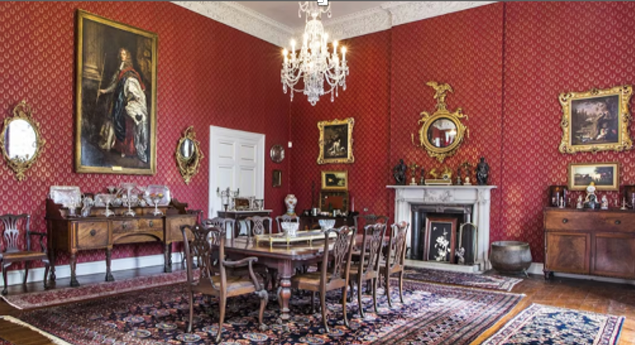
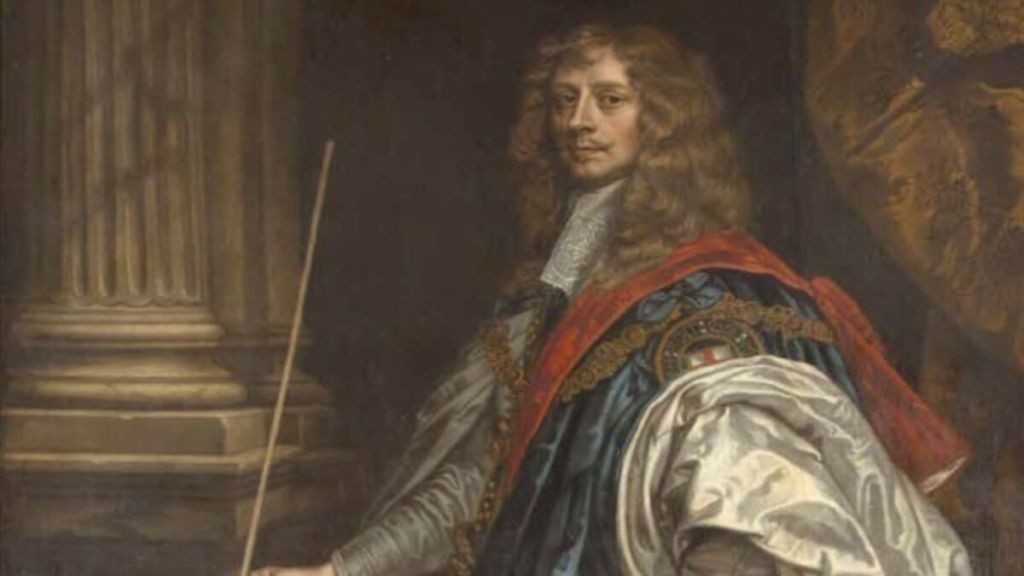
Five generations of furnishings associated with the Galwey family remained in the house, including a Galwey family portrait of James Butler, 1st Duke of Ormond, great uncle of Jane Galwey-Kellett’s grandmother Mary Butler-Galwey, who lived at Lotabeg House from 1711-1765. Mary’s Kilcash family inherited the Ormond entail in 1745, and Jane-Kellett’s father John Galwey of Lota inherited the Ormonde estate of Westcourt.
The 2016 Discovery
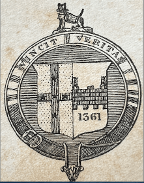
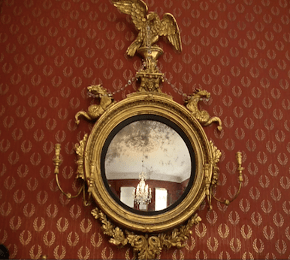
In 2016, Lotabeg House was opened prior to auction, revealing an interior intact with seventeenth-to nineteenth-century furnishings. Contemporary photographic coverage taken at that time shows house contents bearing heraldry corresponding to that recorded in the pedigree of the Galwey family in the College of Arms, and in published genealogical sources. Items described in the auction catalogue include chairs carved with the bridge motif associated with the Galwey arms, and a carved mirror displaying the seated chained cat – a device recorded in heraldic sources as the distinctive Galwey/de Burgh crest.
The portrait of James Butler, 1st Duke of Ormond, photographed at Lotabeg in 2016, corresponds with the documented marriage of Jane Galwey-Kellett’s grandparents, William Galwey of Lotabeg and Mary Butler of Kilcash 1711
These familial associations – as recorded in published sources and reflected in the photographed contents of the house – are consistent with the documented Galwey connection to Lotabeg, from the seventeenth century until 1893.
The Lotabeg Estate and Lotabeg Townlands
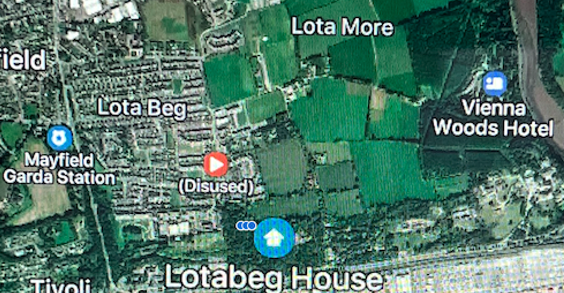
A distinction must be drawn between the Lotabeg estate and the wider Lotabeg townlands. During the eighteenth and nineteenth centuries, portions of the Lotabeg estate lands were sold, and the name “Lotabeg” came to be used more broadly to describe surrounding townlands. As a result, references to individuals being “of Lotabeg” or “living at Lotabeg” do not necessarily indicate residence at Lotabeg House itself. For Example: Contemporary records relating to Daniel Callaghan MP (1786-1849) describe his residence as Carrig House, situated within the Lotabeg townlands.
There is no source (of a fee simple) showing Daniel Callaghan owning or leasing Lotabeg House. The misunderstanding began in 1837 when Samuel Lewis, a government clerk, mistakenly claimed in his topographical dictionary that Danial Callaghan “owned” Lotabeg House. At the time Daniel Callaghan lived at Carrig House in the Lotabeg Townlands. Jane Galwey and her husband Richard Kellett occupied Lotabeg House, which they leased from Jane’s brother Edward Galwey, of Lotamor (registry of deeds, Dublin 1789 – available to Lewis in 1837)
N.B. The use of “Lotabeg” as an address can reflect locality, rather than ownership of the Galwey mansion known as Lotabeg House.



Conclusion
- Lotabeg House originated in the 1670s as part of the Galwey estate of Lota. Documentary sources record its continued association with the Galwey family, until its sale in 1893.
- The distinction between the Lotabeg estate and the broader Lotabeg townlands is important in interpreting references to residents in the locality.
- House contents photographed in 2016 – items bearing heraldry associated with the Galwey family – accord with the documented historical continuity of the house, prior to its sale.
- As does the family portrait of the Duke of Ormond connected with the Lotabeg descendants of Mary Butler-Galwey.
Taken together, the documentary record, and the continued presence of the original house contents from 1893, when the house was sold and left unoccupied until 2016, support the character of Lotabeg House as a seventeenth-to-nineteenth-century estate residence, occupied by the Galwey family from approximately 1675 until 1893.
Sources:
Bennett, C. J. B., The Galweys of Lota (Dublin: Hodges, Figgis & Co., 1909).
Blackall, Sir Henry, “The Galweys of Lota (Part I),” Journal of the Cork Historical and Archaeological Society, vol. 71 (1966), pp. 139–158.
Blackall, Sir Henry, “Genealogy of the Galweys of Lota (Part II),” Journal of the Cork Historical and Archaeological Society, vol. 72, no. 215 (1972), pp. 26–33.
Burke, Sir Bernard, A Genealogical and Heraldic History of the Landed Gentry of Ireland, 4th ed. (London, 1871), entry “Galwey of Lota.”
College of Arms, Pedigree of the Galweys of Lota, 1762/3.
Mealy’s Auctioneers, Lotabeg House Sale Catalogue, 24 May 2016.
Parsons, Michael, “The Cork house that time forgot,” The Irish Times, 14 May 2016.
Duke of Ormond, Encyclopedia Britannica
 Lotabeg House
Leave a comment