Clarification of Ownership
County Cork 1655 – 1961
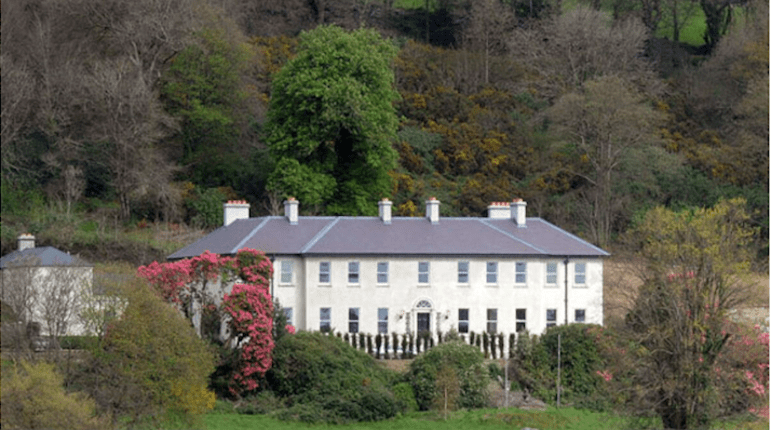
Lotamor House is one of a small number of historic houses in Ireland which remained home to a single Anglo-Irish family for over three centuries, from the mid-seventeenth century until after 1961.
Distinguishing Estate History from Later Misinterpretations
Lotamor House formed part of the Lota estate, which remained in Galwey family ownership from the seventeenth century into the twentieth.
Confusion regarding ownership of the Lota houses can be traced in part to Samuel Lewis’s Topographical Dictionary(1837), which records C. L. Bernard in connection with Lotamor. This reference has been read as indicating ownership or residence in Lotamor House, though the original wording supports only residence within the townland.
Two further factors have contributed to this misunderstanding.
First, the Lota estate, including both Lotamor and Lotabeg, was entailed within the Galwey family. As a result, ownership passed through successive generations without the need for repeated sale or transfer documentation. The absence of such records reflects continuity, not uncertainty.
Second, the expansion of settlement within the Lota, Lotabeg and Lotamor townlands introduced a distinction that later summaries have not consistently preserved. Contemporary sources differentiate clearly between residence within a townland and occupation of a house. Individuals described as “of Lotabeg” or “at Lotamor” are thereby located geographically, not identified as residents of Lotabeg House or Lotamor House.
Failure to maintain this distinction has led to the attribution of house ownership or occupation to individuals such as Callaghan, Rogers, Bernard, Mahonys, Hartman, Harrison, Hackett, Lunham, Cudmore and Pool-Hickman – whose presence is recorded only within the townlands.
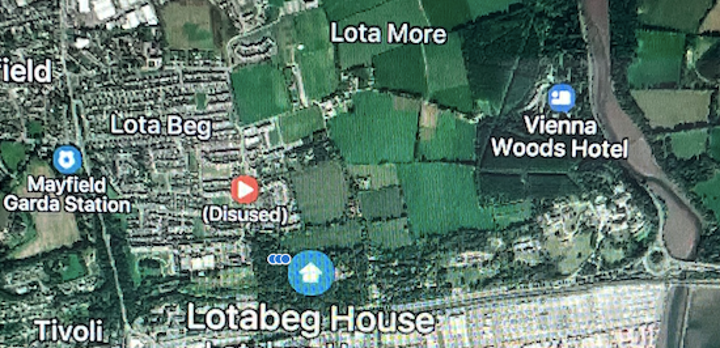
Townland Residents and the Estate Structure
Names frequently associated with the Lota district — including Callaghan, Rogers, Bernard, Mahony, Hartman, Harrison, Hackett, Lunham, Cudmore and Poole-Hickman — appear in contemporary records as residents of the townlands or as participants in the wider estate structure.
These references do not constitute evidence of ownership or occupation of the principal houses.
The Rogers family, for example, are well documented as long-term tenant farmers on the Lota estate, holding farmland leases from 1694 until the sale of their leasehold interests in 1857. Their presence reflects estate tenancy, not ownership of land or houses.
The position of Lota Lodge central to the farmlands, suggests the Galweys built the Lodge as a residence for their tenant farmers.
Continuity of Ownership and Residence
Surviving estate records provide a consistent framework:
- Galwey ownership of the Lota lands is recorded across multiple dates from the sixteenth to the nineteenth century
- Lotamor is repeatedly identified as the principal residence of the family
- Lotabeg is documented as part of the estate from 1673, later leased within the family
This continuity of landholding and residence is unusually well preserved in the surviving record.
Reinstatement of the Galweys of Lota
Genealogical and heraldic sources, including Blackall’s journals and the 1763 pedigree, record the Galwey family’s prominence in medieval Cork, their connection with the de Burgh lineage, and their succession through the Butler line of Kilcash.
Following the forfeiture of Galwey Castle in the 1650s, the family established themselves at Lota. John Mór Galwey held the Lotamor lands by 1641, and his son Edward later fixed his residence there.
In 1673, Edward Galwey purchased the Lotabeg lands and built a second house, while Lotamor became the principal residence of the senior branch.
This arrangement continued for over two centuries. The entail was eventually broken in the nineteenth century to allow inheritance through Matilda Galwey-Murphy, whose son Charles inherited the estate. He sold Lotabeg in 1893, while Lotamor remained in family ownership until after 1961.
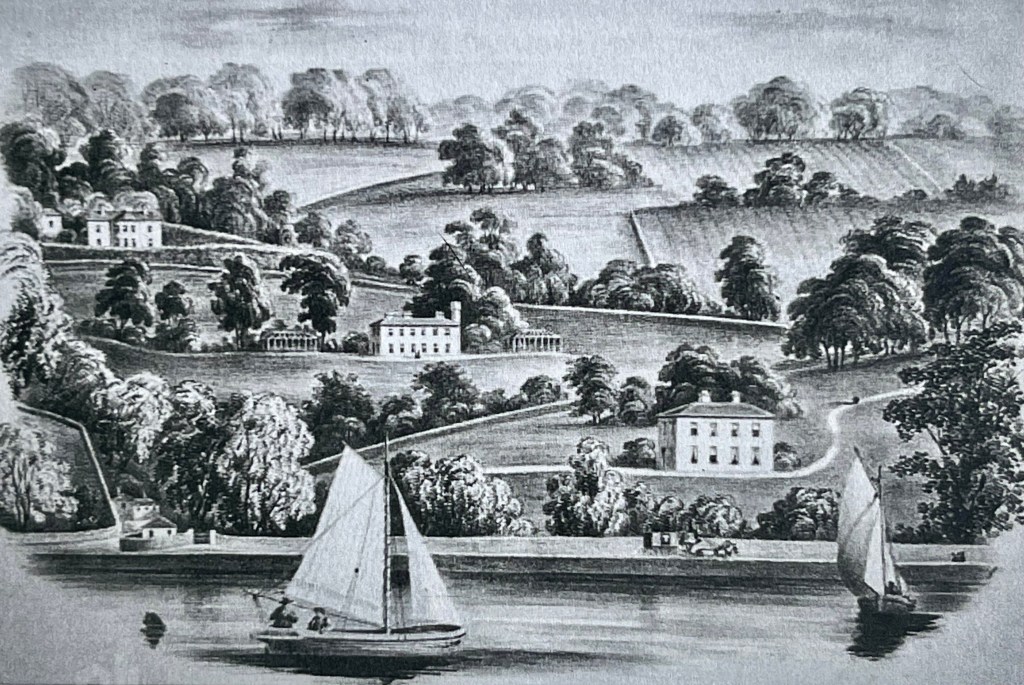
Houses on the Lota Estate
Galwey family houses
- Lotamor (1650s) principal residence and estate house
- Lotabeg (1670s) secondary home, and estate house
- Lota Lodge (1694) Galwey house provided for their tenant farmer
- Lotaville 1761 Helen Galwey and Philip Townsend
Other houses built on the Galwey Lota estates
- Lota Park (early 1800s) – Beamish until 1836 then J.J.Murphy
- Lota House (early 1800s) – Col. Green til 1856 then A.Wood
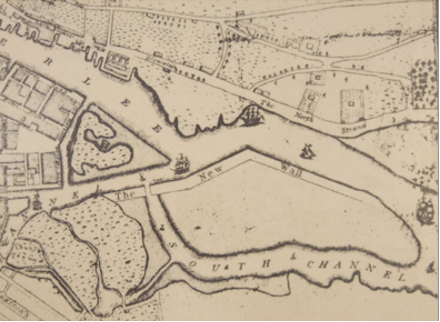
Cork City with Lota Estates North of the Strand
Conclusion
Genealogical records, estate documentation and lease evidence together demonstrate sustained Galwey ownership of the Lota lands and continued residence at Lotamor, with Lotabeg remaining within the family until its sale in 1893.
The principal source of confusion lies not in the evidence itself, but in its interpretation. Where contemporary records distinguish between townland and house, that distinction must be preserved.
Restoring it allows the historical record to be read as it was originally intended, and clarifies the position of the Galwey family within the Lota estate.
Sources:
- Blackall Sir Henry, “Genealogy of the Galweys of Lota,” 1967 part 2, pages26-33. Journal of the Cork Historical and Archaeological Society.
- Blackall Sir Henry, “Galweys of Munster” 1966, pages 139-42 and 154-6. Journal of the Cork Historical and Archaeological Society.
- Pedigree of the Galweys of Lota, College of Arms (1762/3)
- Burke’s Landed Gentry of Ireland. (1846-71 editions)
- Bennett C.J.B. “Galweys of Lota” 1909, pages 5-17,w/ letters, 1800s. Hodges and Figgis, Dublin. A contemporary Lotabeg cousin of Edward and Jane Galwey.
- Cork Examiner: 13th Aug. 1847 – Daniel Callaghan MP, Carrig House Lotabeg
 Lota Estates, County Cork
Leave a comment